Every cost a flip actually carries
The number most people quote for a flip is the gap between purchase price and expected sale price. That gap is not the margin, because it ignores everything in between. BuyerWingman builds the full picture from the same property facts used across the platform.
- Purchase price — the price you would actually pay, not the asking price alone.
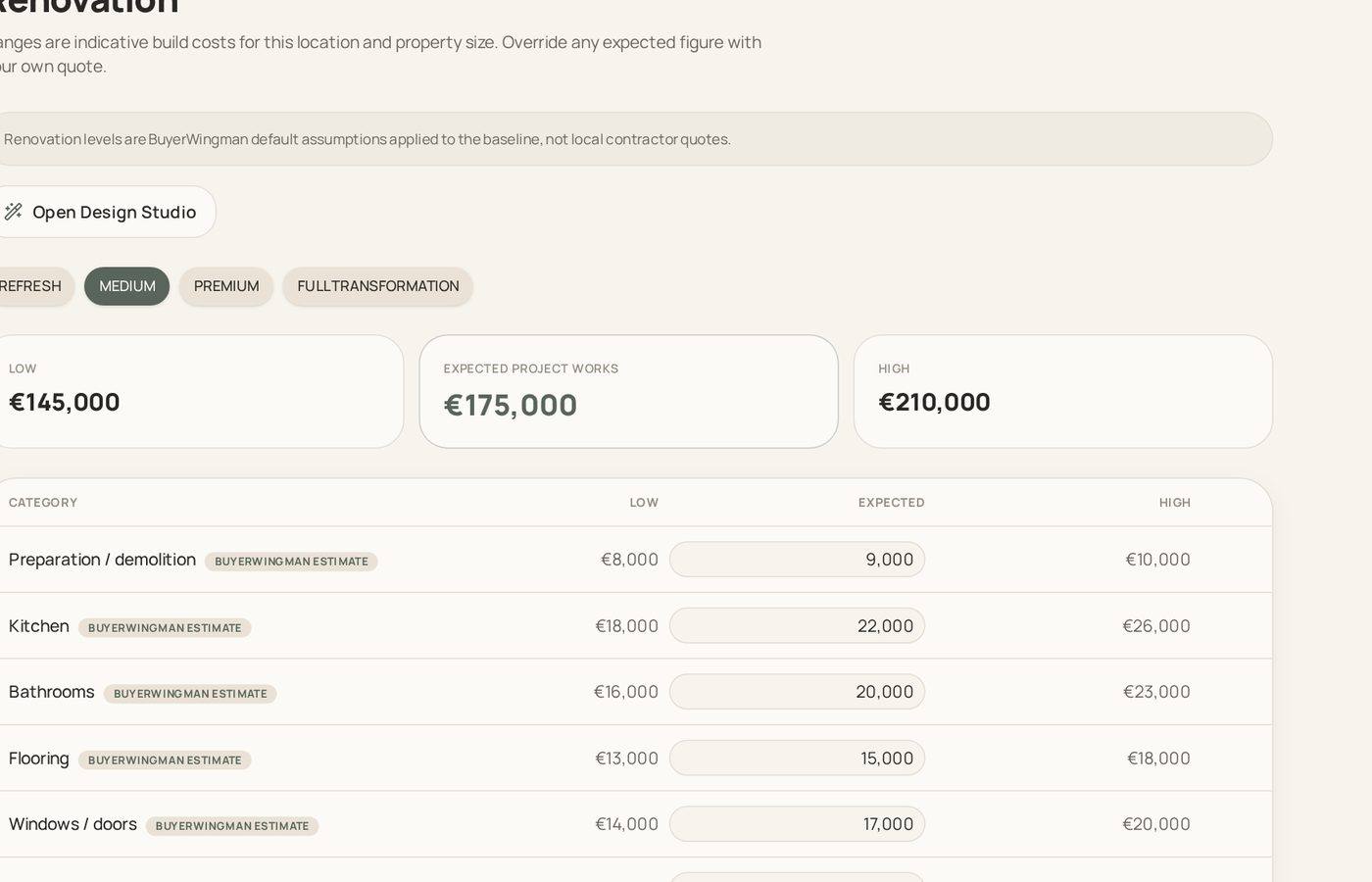
- Renovation cost — a category-by-category estimate built from the property's real condition and size, the same figures used in the renovation planner.
- Acquisition costs — taxes, fees and other costs of buying that are easy to forget until they appear on an invoice.
- Estimated resale value — what the renovated property could plausibly sell for, based on comparable evidence for a property of that size and finish in the area.
Gross margin, net margin, and the difference between them
Gross margin is the estimated resale value minus purchase price and renovation cost. Net margin goes further, deducting acquisition costs, selling costs and holding costs for the period the property is owned but not yet sold. The two numbers can look very different, and it is the net figure that tells you whether a flip is actually worth doing.
BuyerWingman shows both, side by side, so a flip that looks attractive on a gross basis but thin on a net basis is visible before you commit rather than after.
Where the downside actually comes from
Flips rarely fail because renovation costs run over by a little. They fail because the acquisition price was too high to begin with, leaving no room to absorb a normal renovation overrun or a resale value that lands at the low end of the range rather than the high end.
BuyerWingman makes that risk visible by comparing the purchase price against the property's estimated acquisition value, and by showing the margin at the low, expected and high end of the resale range, not just a single optimistic figure. Where the numbers only work at the top of the range, that is stated plainly.
Return potential, not a guarantee
Alongside the margin, BuyerWingman estimates a return on the cash actually invested, so a flip can be compared against other uses of the same money. Every figure here is an estimate built from comparable evidence and stated renovation assumptions. Actual results depend on the renovation being delivered on budget, the sale executing at the estimated price, and market conditions that can move in either direction. BuyerWingman does not guarantee a resale price, a renovation cost or a return.
Built on the same property facts as everything else
The renovation cost estimate is the same one used in the renovation planner and design studio, so a flip plan is consistent with what the property would actually need, not a separate guess. The resale value estimate draws on the same valuation and local market data used elsewhere on the property, so a flip and a hold-and-rent strategy can be compared fairly for the same property.
How it connects to the rest of BuyerWingman
Flip potential reads from the property's valuation, its renovation plan and its acquisition guidance, and it can be weighed in deal finance against the total cash required and how the purchase and renovation would actually be funded. Where a flip does not pencil out, the same numbers often show whether a long-term rental strategy would.